For many boat owners, fuel efficiency is becoming an increasingly important part of vessel management. Whether operating a recreational cruiser, fishing vessel, workboat or commercial fleet, rising fuel prices are placing greater pressure on owners, meaning they need to find practical ways to reduce operating costs without compromising performance.
One of the most overlooked contributors to fuel consumption sits beneath the waterline, and marine growth on propellers, shafts, struts and rudders can significantly reduce a vessel’s efficiency, increase drag, force engines to work harder and drive-up fuel burn. Even relatively minor fouling can have a surprisingly large impact on performance, but the good news is that maintaining clean running gear can restore efficiency, reduce power demand and improve overall vessel performance.
Advanced foul-release coating systems such as PropOne are designed to improve efficiency by preventing marine growth from strongly attaching to underwater metals, leading to smoother operation, reduced fuel consumption, and lower maintenance demands between haul-outs.
“Silicone foul-release technologies have reported drag reductions of up to 23% — helping support improved efficiency, lower fuel burn and better vessel performance.”
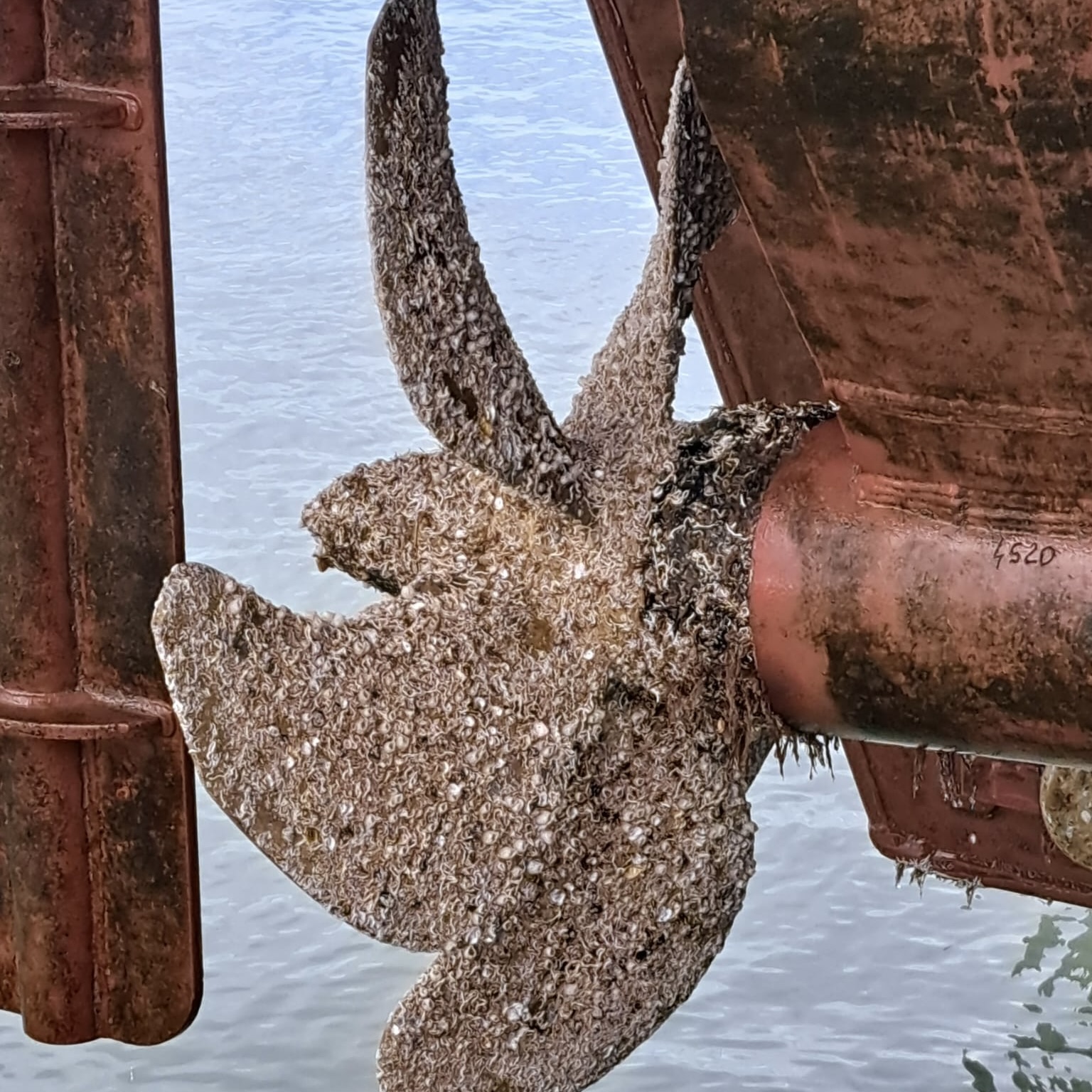
A heavily fouled propeller which will significantly increase fuel consumption
Does PropOne actually save fuel?
Keeping propellers and running gear clean can deliver measurable energy savings because a smooth underwater surface moves through the water with far less resistance. When fouling builds up, hydrodynamic drag increases rapidly, reducing propulsive efficiency and forcing engines to consume more fuel to maintain speed.
Studies examining vessel performance consistently show that even light to moderate fouling can dramatically increase energy demand. In some cases, fouling on a propeller alone can account for up to 50% of increased energy consumption. That level of inefficiency can have a major financial impact over time, particularly for vessels operating frequently or over long distances.
Foul-release coating systems like PropOne are designed to reduce this problem by creating an ultra-slick surface that makes it difficult for marine organisms to bond to underwater metals. Unlike traditional antifouling paints that rely on biocides, foul-release coatings focus on minimising adhesion strength, making growth easier to remove naturally through vessel movement or light cleaning.
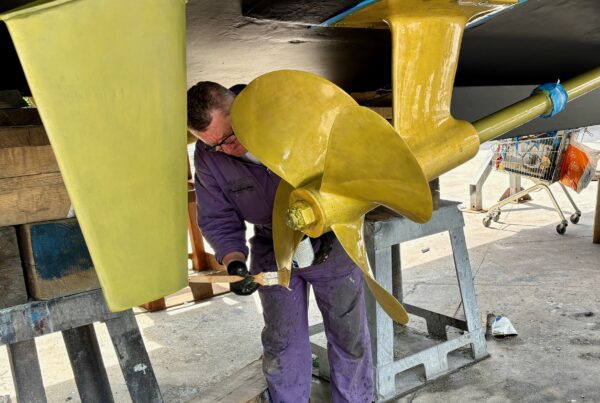
@coastmarineservices showing us how easily fouling is removed on the PropOne coated duoprops!
Why does fouling have such a big impact?
Propellers operate in incredibly demanding environments and rely on smooth, uninterrupted water flow to generate efficient thrust. This means that even small imperfections or biological growth, such as slime, algae, tubeworms, and immature barnacles, can increase surface roughness, requiring more energy to move the vessel through the water.
As fouling worsens, vessels can experience a range of performance issues, including increased fuel consumption, reduced speed, higher engine loads, increased shaft RPM, greater torque demand, and reduced responsiveness and acceleration. Operators may also notice they are using more throttle to maintain cruising speed or that engines appear to be working harder than normal. Industry research suggests that a fuel consumption increase greater than 5% is already considered a strong indicator of excessive fouling on running gear. Macrofouling, such as barnacles and mussels, can create even more severe problems by increasing both hydrodynamic drag and the physical weight of submerged components, placing additional strain on propulsion systems and impairing vessel handling and performance.
Clean running gear improves more than fuel economy
The benefits of clean underwater metals extend beyond lower fuel bills, and maintaining efficient propellers and running gear helps improve speed retention, lowers power demand and reduces mechanical stress on propulsion systems. For commercial operators, this can contribute to lower maintenance costs and improved operational reliability.
In high-utilisation vessels, even relatively small efficiency gains can produce significant annual savings. When engines consume less fuel, they produce fewer carbon emissions, which has become increasingly important as commercial operators face tighter environmental regulations and rising pressure to improve sustainability.
The hydrodynamic advantage of foul-release coatings
The benefits of foul-release coatings extend beyond preventing marine growth, and research on silicone-based coating systems has shown that ultra-smooth underwater surfaces can improve hydrodynamic efficiency even when fouling is not present. Testing on commercial vessels found that applying a foul-release coating to clean propellers reduced fuel consumption and lowered power demand at cruising speed, demonstrating that the coating itself can reduce skin friction more effectively than untreated metal.
“Clean running gear can deliver some of the biggest efficiency gains below the waterline — with research showing that up to 50% of fuel savings from hull cleaning comes from propellers and underwater metals alone.”
Studies have also shown that smoother coating surfaces create less drag than conventional antifouling paints, which often have a rougher finish. Depending on vessel type and operating conditions, silicone foul-release technologies have reported drag reductions ranging from 2% to 23%. For vessel owners, this translates into improved efficiency, reduced fuel burn and better overall performance between dockings.
| Months in Service | PropOne Fuel Consumption L/Hour per engine |
Uncoated Fuel Consumption L/Hour per engine |
Average Fuel Saving
Over Operating Period (%) |
| 0 | 100 | 100 | 0 |
| 6 | 101.6 | 107.7 | 4.2 |
| 12 | 103.3 | 116 | 6.7 |
| 18 | 105 | 125 | 10.1 |
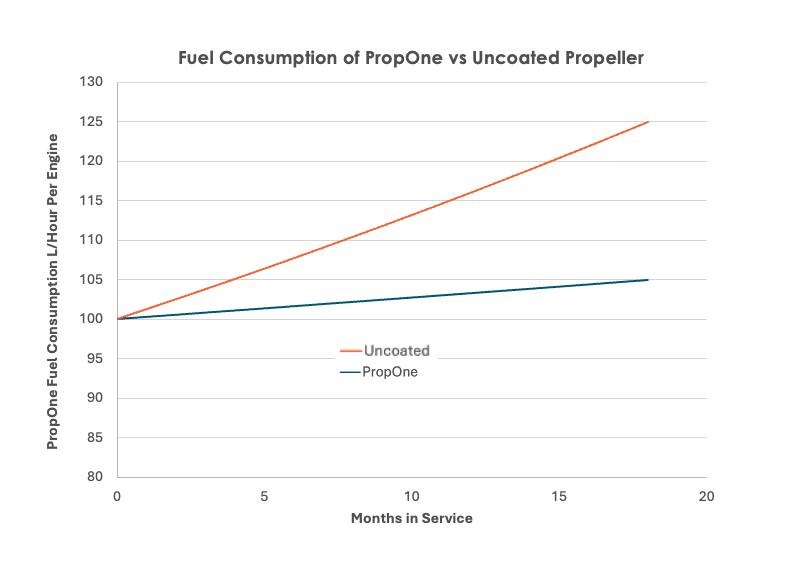
* Theoretical fuel savings on a vessel used on average once per week.
How PropOne works
PropOne’s foul-release technology creates a slick, low-friction surface that discourages marine organisms from firmly attaching to underwater metals. Rather than permanently bonding to the surface, organisms such as slime and barnacles struggle to gain a strong hold. Once the vessel is underway and reaches operating speed, water pressure and propeller movement help dislodge much of the growth naturally.
This is effective on fast-moving underwater components such as propellers, and in many cases, fouling that develops during static periods can be removed through normal vessel operation or with a light underwater wipe rather than aggressive scraping or polishing.
This approach offers several practical advantages:
- Reduced hard marine growth accumulation
- Easier underwater cleaning
- Improved long-term efficiency
- Lower maintenance demands
- Smoother running gear surfaces
- Better performance retention between dockings
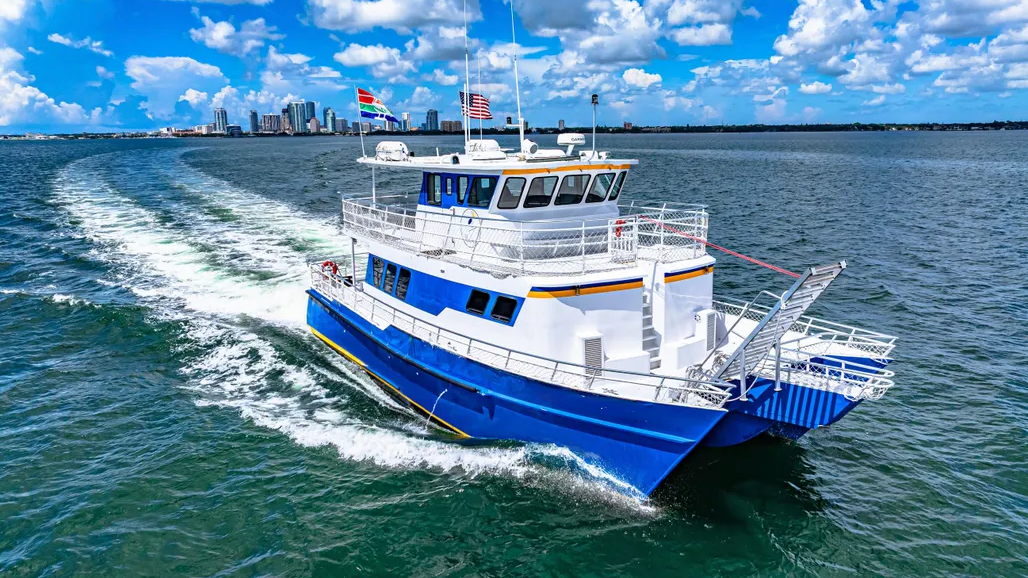
Keeping underwater metals cleaner for longer helps commercial vessels operate more efficiently.
The importance of running gear maintenance
While hull fouling often receives most of the attention, studies suggest that cleaning propellers and running gear delivers some of the highest efficiency returns available. Research indicates that approximately 50% of total fuel savings achieved during a full hull cleaning can be attributed specifically to cleaning propulsors, shafts, struts and rudders.
Mechanical underwater cleaning remains an important maintenance strategy, particularly between scheduled drydockings, and removing biological growth restores efficiency and helps maintain optimal operating conditions. However, combining routine cleaning with a foul-release coating system provides a more proactive approach by reducing how quickly fouling establishes itself. That means vessels spend more time operating efficiently and less time losing performance between maintenance intervals.
Final thoughts
By helping underwater metals remain smoother and cleaner for longer, foul-release coatings such as PropOne support improved hydrodynamic efficiency, while helping to reduce drag and lower engine demand. For recreational boat owners, that can mean longer range, improved performance and reduced fuel spend, while for commercial operators, the benefits scale even further through lower operating costs, improved speed retention and reduced emissions across entire fleets.
As operating costs continue to rise, maintaining clean underwater metals has become an increasingly valuable part of vessel performance management, and if you want to find out more about how we can help you, get in touch today.
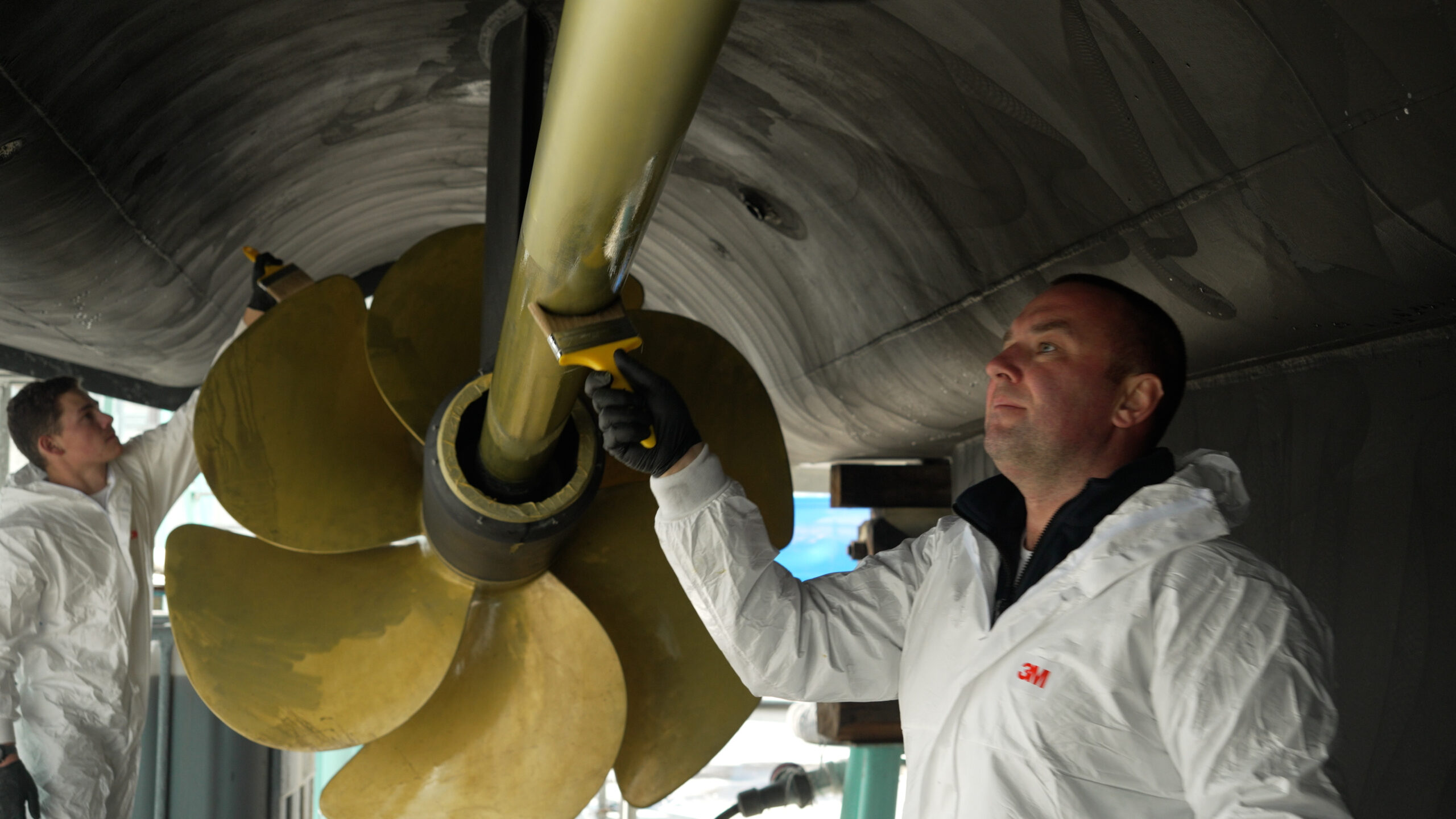
Cleaner props and running gear help support efficiency, performance and reduced operating costs.