Humans have used iron for thousands of years, harnessing the metal for everything from tools and weapons to infrastructure. However, it’s only been in the last 150 years that metallurgists have mastered the art of producing stainless steel – a material that has revolutionised industries across the globe, including marine engineering.
While scientists first discovered the excellent corrosion resistance of chromium alloyed steels in the 19th century, it wasn’t until the early 1900s that stainless steel was patented and manufactured. In this latest article, we thought we would explore why stainless steel can be a great choice for use in marine propellers.
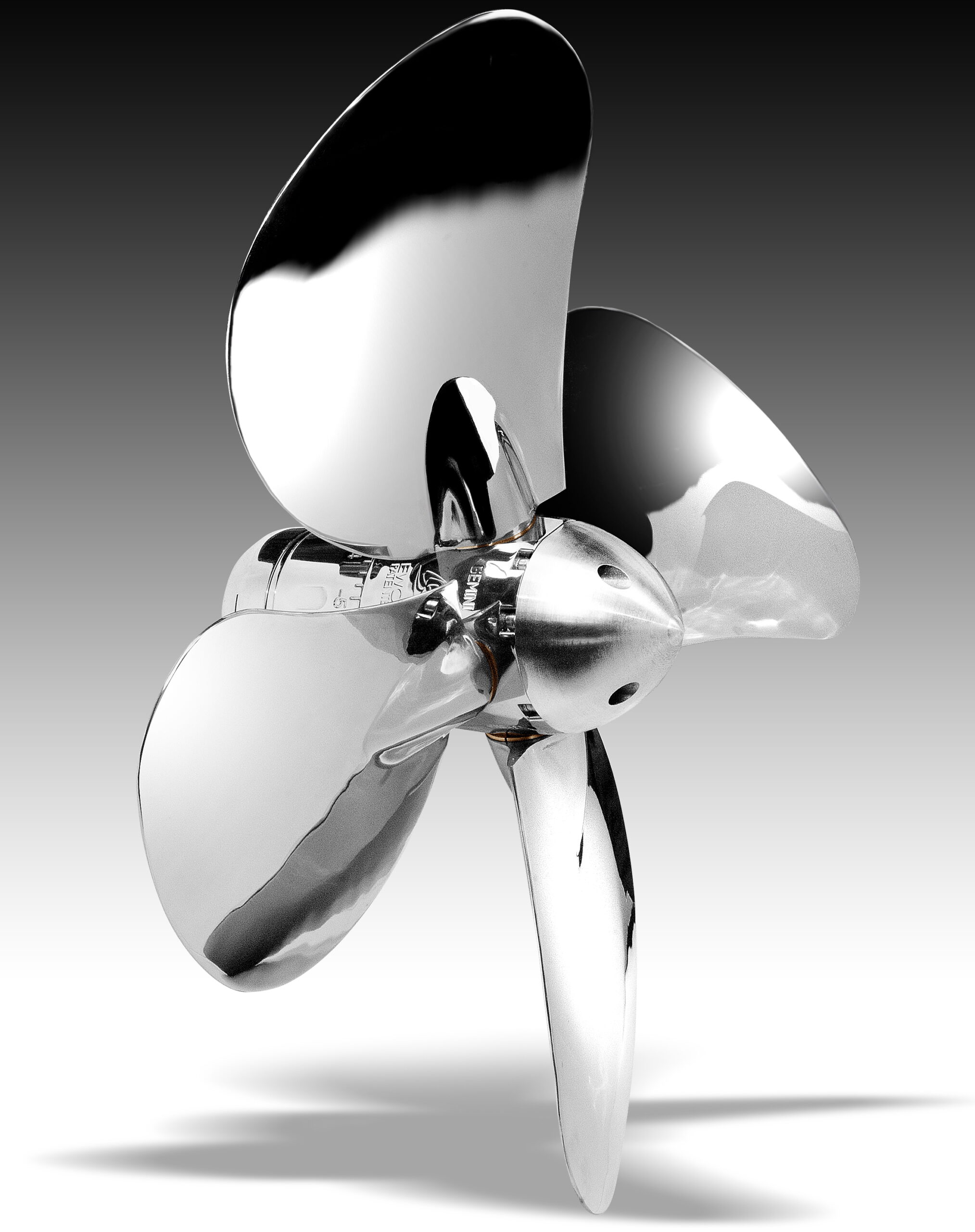
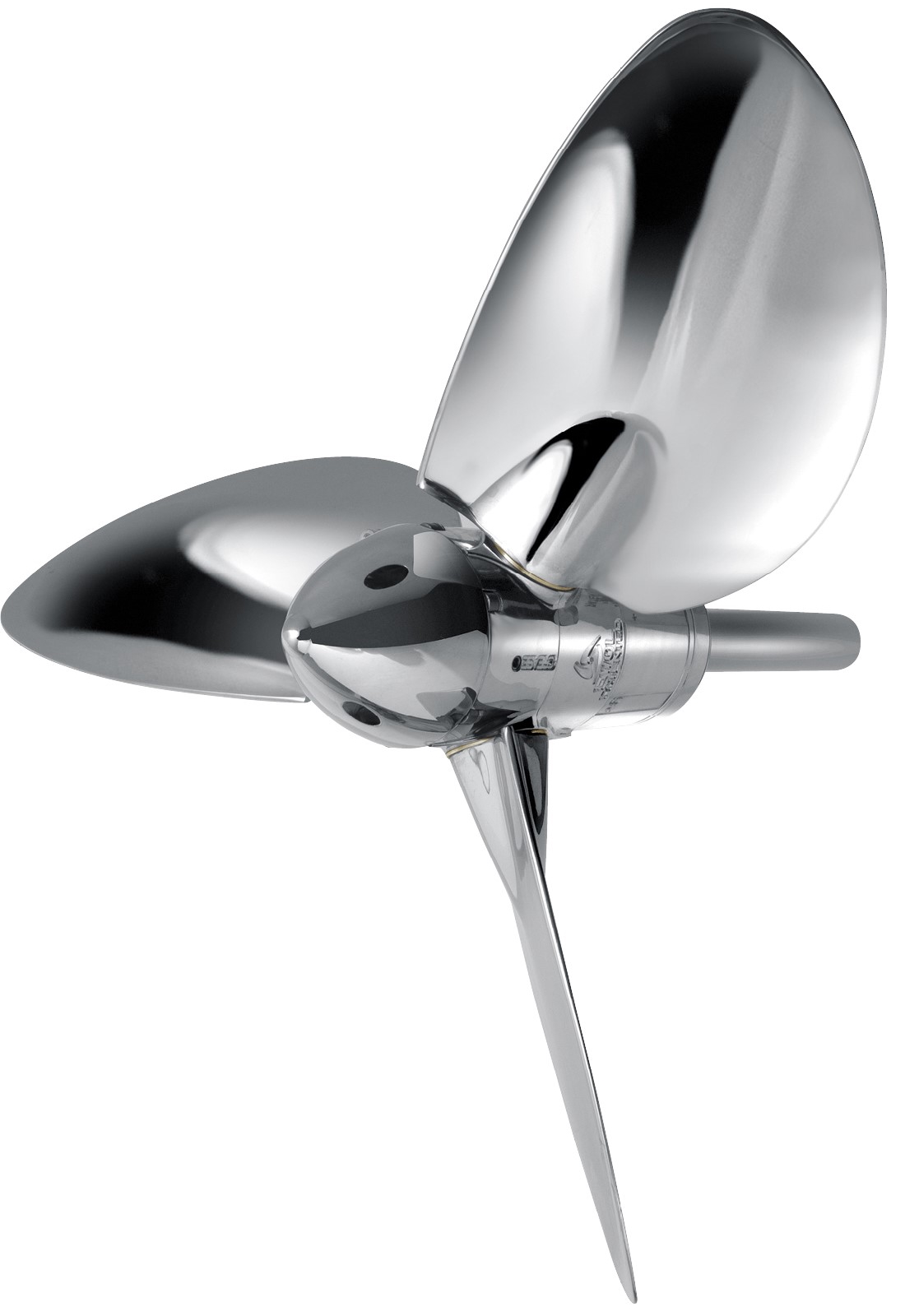
Types of stainless steel propeller
Modern marine stainless steel propellers are crafted from several different grades of stainless steel, each with unique properties that are tailored to specific applications. The most common types include:
- Austenitic Stainless Steel (AISI 316):While offering good strength, austenitic steels have lower tensile strength compared to martensitic and duplex grades. It has good strength for general marine applications and enhanced corrosion resistance, particularly in saltwater environments.
- Martensitic Stainless Steel (AISI 431): A popular choice for marine, aerospace, and automotive industries. It boasts superior mechanical strength and corrosion resistance, making it ideal for high-performance propellers.
- Duplex Stainless Steel (AISI 2205): A more recent innovation, duplex stainless steel combines the best properties of austenitic and ferritic steels. It has high proof stress and tensile strength. While more costly and requiring specialized manufacturing techniques, its combination of extreme strength and corrosion resistance makes it an excellent choice for propellers in the most demanding marine environments.
- Super Duplex Stainless Steel (AISI 2507): This is a highly alloyed version of duplex stainless steel. It takes the excellent properties of duplex steels to an even higher level for highly specialised marine propeller applications.
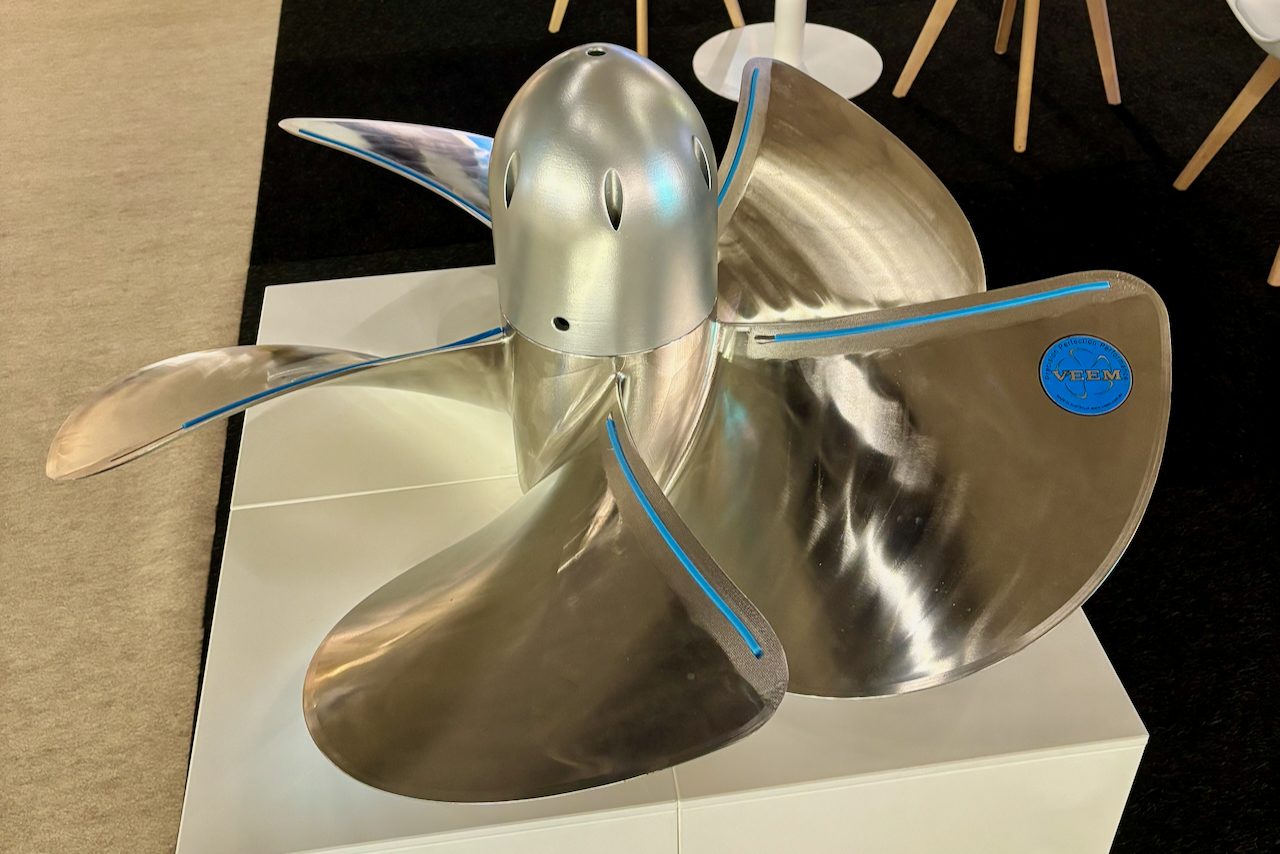
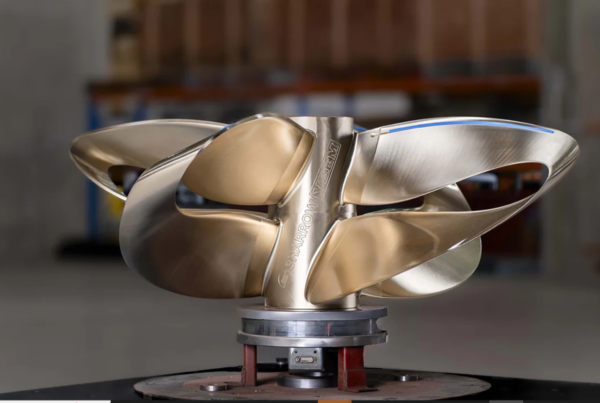
VEEM EXTREME: High tensile stainless steel propeller
Grade |
||||
Element |
AISI 316 |
AISI 431 |
Duplex AISI 2205 |
Super duplex AISI 2507 |
| Iron | 61−72% | 76−84% | 65−70% | 58−65% |
| Chromium | 16−19% | 15−18% | 21−23% | 24−26% |
| Nickel | 10−14% | 1−3% | 5−7% | 6−8% |
| Molybdenum | 2−3% | ≤1% | 3−4% | 3−5% |
| Manganese | ≤2% | ≤2% | ≤2% | ≤2% |
| All Others | ≤1% | ≤1% | ≤1% | ≤2% |
"Stainless steel allows the design of propellers with smaller thicknesses and consequent reductions in weight, inertia, and fuel consumption."
Why is stainless steel so popular?
While many propellers continue to be made from bronze, stainless steel provides boatbuilders with a modern alternative. The unique properties of the metal are able to offer a range of benefits, including:
- Strength
Stainless steel has a much higher tensile and yield strength compared to bronze or nickel-aluminium bronze (NIBRAL) propellers. This allows for thinner and more efficient blade designs, helping to reduce drag and boost performance.
- Durability
The stainless steel used in the production of propellers is not trade standard such as AISI 304 or 306, but instead, steel with very high mechanical and corrosion resistance. This means it is very durable and highly resistant to environmental degradation.
- Electrolysis resistance
Bronze propellers often suffer from galvanic corrosion when used in combination with other metals. On the other hand, stainless steel significantly reduces the risk of electrolysis-related damage and is particularly suitable for use on boats with aluminium or carbon hulls.
- Mechanical resistance
The high mechanical resistance of stainless steel ensures that propellers made from this material can withstand heavy loads and high-speed conditions without deforming or cracking.
Traditional bronze propellers tend to be brittle and susceptible to corrosion, particularly in polluted waters. Stainless steel, on the other hand, provides enhanced strength and resilience in extreme conditions, making it the ideal material for modern marine applications.
Adapting the recipe…
Over the years, the manufacturing process of stainless steel propellers has evolved to ensure optimal performance as boats have become larger and more powerful. This means the internal strength requirements of stainless steel propellers need to be very high, which means that traditional forging methods are not suitable, as this can lead to tracheotomy and air bubbles.
Instead, high-precision casting is the primary method of production. This method sees molten stainless steel poured into a mould and allowed to cool before undergoing mechanical polishing to eliminate imperfections and enhance performance.
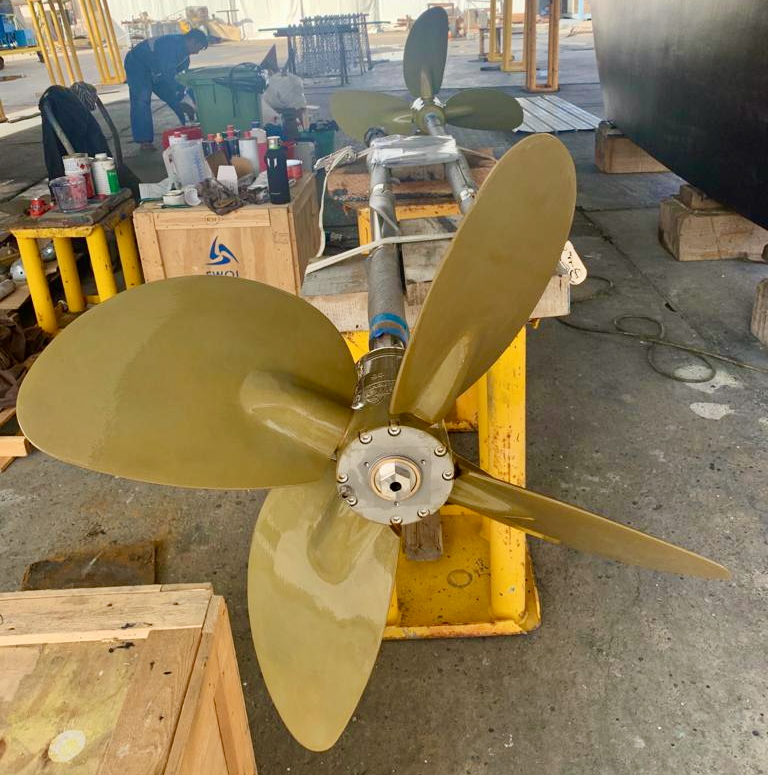
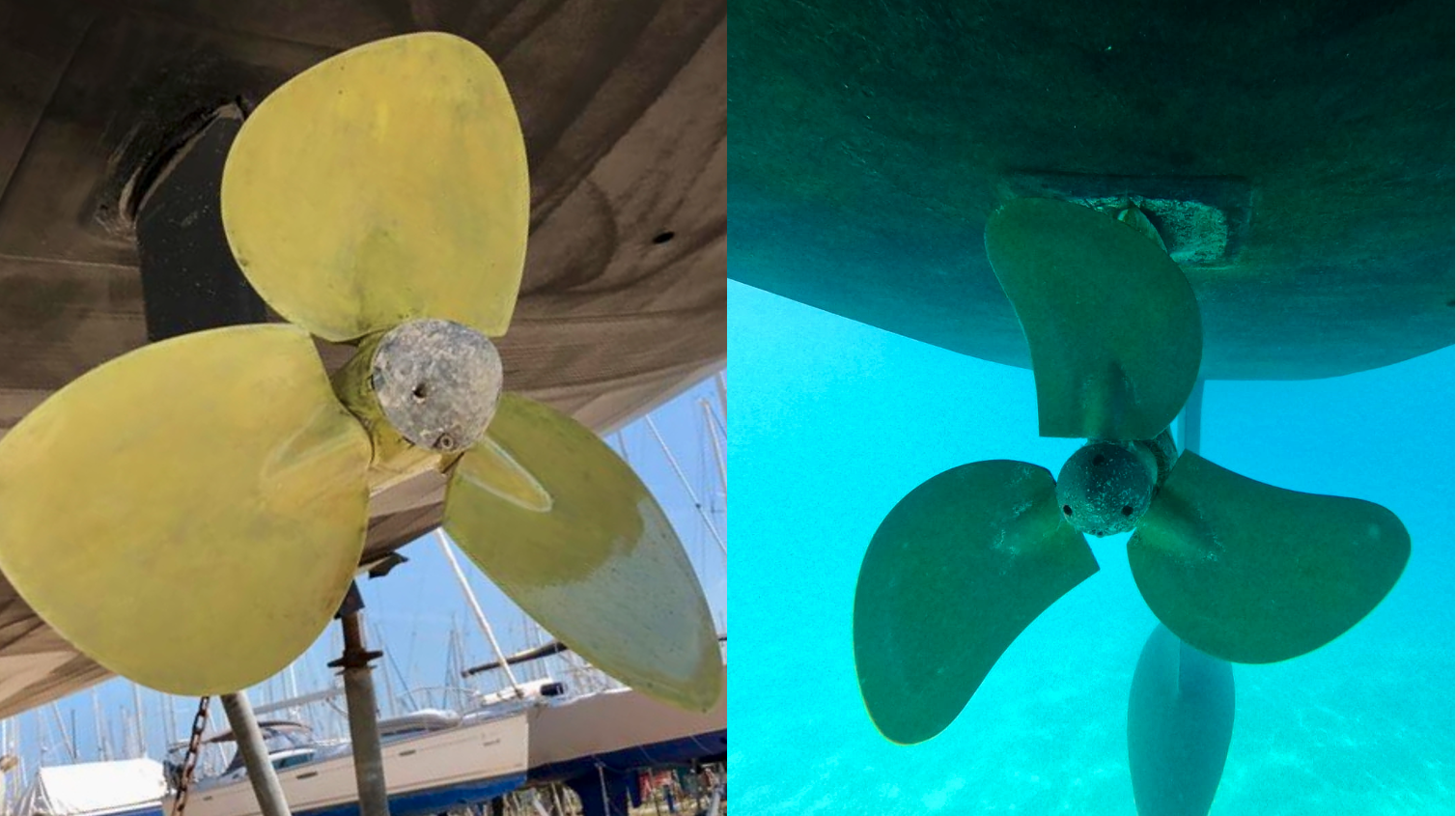
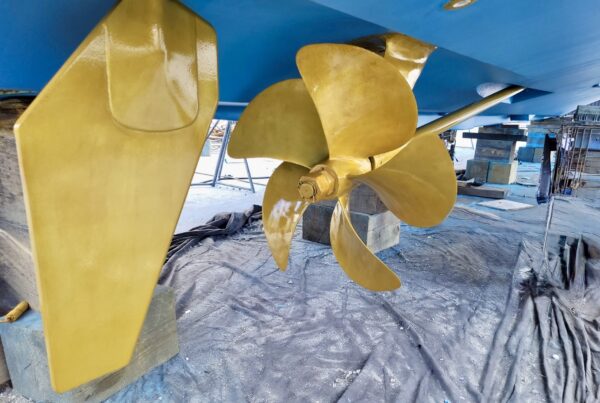
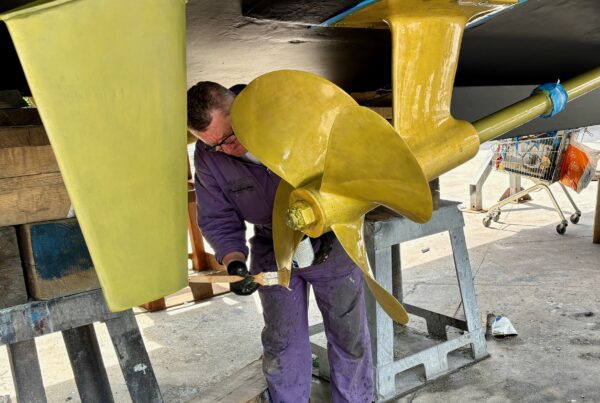
Stainless steel EWOL propeller coated in PropOne
How do stainless steel propellers compare to other metals?
When comparing stainless steel propellers to other materials, such as nickel-aluminium bronze, it is often able to outperform in certain areas. For example, while nickel-aluminium bronze performs well in clean seawater, its resistance significantly declines in polluted or industrial waters. This has become a major concern in recent years as the pollution levels in harbours and rivers have intensified due to the discharge of industrial wastewater and urban sewage increasing organic matter.
In heavily polluted waters, bronze propellers often develop blackened, rough surfaces due to corrosion. Stainless steel propellers, however, maintain their integrity and efficiency over prolonged use. Stainless steel also has higher tensile and yield strength, which allows for blade thickness and overall weight to be reduced. In addition to that, it also remains highly durable in varied marine conditions, unlike bronze, which can suffer from phase selection corrosion.
While bronze is used widely across the marine industry, stainless steel grades like AISI 316 or higher grades such as super duplex are some options; they offer a far higher yield and tensile strength when compared to NIBRAL bronze. Stainless steel also has very strong durability and provides lower susceptibility to damage due to sandy conditions or corrosion. These features allow the design of propellers with smaller thicknesses and consequent reductions in weight, inertia, and fuel consumption.
Final thoughts
Selecting the right material for a propeller is critical to ensuring optimal performance and longevity. While bronze has historically been the preferred choice, modern advancements in metallurgy have made stainless steel a viable option, too.
However, regardless of the material used, maintaining a propeller free from marine growth is essential. Applying a foul-release coating, such as PropOne, can help keep your propellers operating at peak performance by creating a slick surface that dramatically reduces the build-up of marine fouling!
Curious to now understand why bronze has long been the traditional choice for propellers? Read our article: Still in the Bronze Age? Why is Bronze the Go-To Industry Standard?